Tesla FSD China 2026
Tesla's Full Self-Driving (FSD) system has been making headlines as it prepares for full-scale entry into the Chinese market, one of the world's largest and most complex automotive markets. At the Davos Forum, Elon Musk revealed that Tesla's driver-supervised FSD autonomous driving system is expected to receive approval in China as early as February 2026, marking a significant milestone in the company's global autonomous driving strategy. However, Tesla China officials have responded with caution, stating that FSD's market advancement work in China currently has no new progress to disclose, highlighting the complexity and sensitivity of regulatory approval processes.
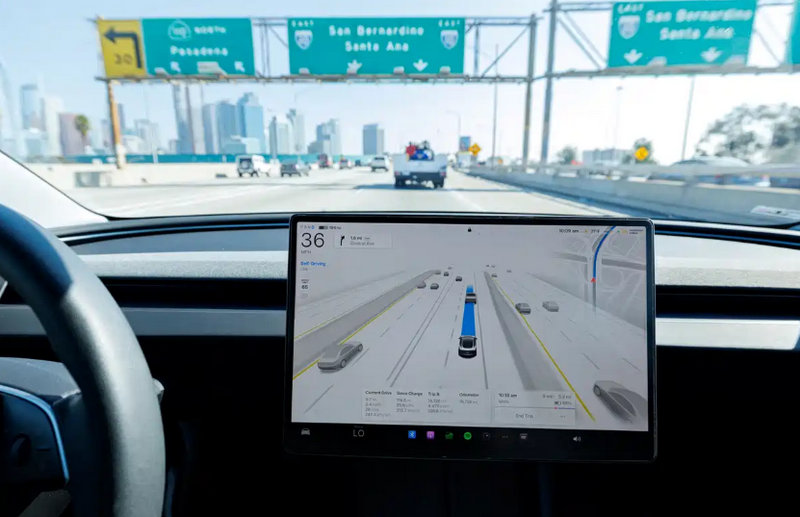
The potential entry of Tesla's full-featured FSD into China represents more than just a product launch—it signals a fundamental shift in how autonomous driving technology will be deployed in one of the world's most challenging driving environments. With Tesla's strategic preparations including data center construction, computing infrastructure development, and regulatory alignment, the stage is being set for what could be the most significant autonomous driving deployment in China's automotive history. This comprehensive guide explores the technical capabilities, infrastructure requirements, market implications, and competitive landscape surrounding Tesla FSD's anticipated entry into China.
Approval Timeline and Regulatory Status
Elon Musk's announcement at the Davos Forum that FSD could receive approval in China as early as February 2026 aligns with previous statements made during Tesla's shareholder meeting, where he indicated that FSD was expected to receive full approval in China during "February or March 2026." This timeline represents a carefully orchestrated sequence of events that includes policy alignment, infrastructure readiness, and regulatory approval processes. However, Tesla China's official response maintains a more conservative stance, emphasizing that there is currently no new progress to disclose regarding FSD's market advancement in China.
The discrepancy between Musk's optimistic timeline and Tesla China's cautious response reflects the complex nature of regulatory approval processes in China's automotive market. Regulatory authorities must carefully evaluate FSD's safety, compliance with local traffic regulations, and ability to handle China's unique driving conditions before granting approval. The approval process involves multiple government agencies, including the Ministry of Industry and Information Technology, the Ministry of Public Security, and local transportation authorities, each with specific requirements and evaluation criteria.
Despite the cautious official response, several indicators suggest that Tesla has been making significant progress toward FSD approval in China. The company has established a data center in Shanghai, which is crucial for complying with China's data localization requirements. Additionally, the lifting of export restrictions on NVIDIA H200 AI chips to China removes a critical barrier that had previously limited Tesla's ability to train FSD models using local Chinese data. These developments, combined with Musk's timeline, suggest that approval may be closer than Tesla China's official statements indicate.
Technical Capabilities and Performance
Tesla FSD's technical capabilities have reached impressive levels, as demonstrated by real-world performance data and expert evaluations. He Xiaopeng, CEO of XPeng Motors, who tested Tesla's latest FSD version in the United States, described the experience as "shocking," stating that it represents "the difference between the previous generation of cars and the next generation of cars." His evaluation highlights the significant technological leap that FSD represents in autonomous driving capabilities.
Perhaps the most compelling demonstration of FSD's capabilities came in early 2026, when a Tesla owner in the United States completed a 4,396-kilometer journey across 24 states using FSD V14.2, covering the distance in 68 hours with zero human intervention. The vehicle autonomously handled highway driving, urban navigation, nighttime operation, and even located charging stations for recharging—all without the driver touching the steering wheel. This achievement demonstrates that in North American conditions, FSD has evolved beyond simple driver assistance to a system capable of continuous decision-making and driving capabilities approaching human-level performance.
He Xiaopeng's detailed evaluation notes that FSD has progressed from the "smooth experience" of L2+ advanced driver assistance systems observed in mid-2024 to what he describes as a "quasi-L4" level of confidence in the software. This progression represents a significant advancement in autonomous driving technology, moving from systems that require constant driver supervision to those capable of extended autonomous operation with minimal human oversight. However, it's important to note that North American road conditions are generally less complex than those in China, particularly regarding mixed traffic scenarios involving pedestrians, bicycles, and vehicles that are common in Chinese urban environments.
Infrastructure and Technical Preparation
Tesla has been making comprehensive preparations to support FSD's full deployment in China, addressing critical infrastructure and technical requirements. The company has established a data center in Shanghai that stores over 3 billion kilometers of China-specific road data. Previously, this data center could only store data but not use it for training due to regulatory restrictions and technical limitations. The establishment of local high-performance computing (HPC) infrastructure will activate this mechanism, enabling data to be used for training without cross-border transmission.
The lifting of export restrictions on NVIDIA H200 AI chips to China represents a crucial development for Tesla's FSD deployment. The H200 is the core computing platform that Tesla uses to train FSD's neural networks in the United States. If Tesla can become one of the first customers for these chips in China, it will essentially provide FSD with a "local brain"—the computing power necessary to train and refine FSD models using Chinese road data without relying on overseas computing resources.
Tesla China has been actively recruiting "Senior HPC System Engineers," indicating the company's commitment to building next-generation high-performance data centers in China. This local infrastructure development is essential for complying with China's data localization requirements while enabling efficient model training and iteration. Once these components are in place, Tesla will be able to train a dedicated FSD brain for Chinese road conditions using Chinese data, all while complying with Chinese regulations—effectively solving the long-standing problem of data not being able to leave China.
Current Limitations and Challenges
Currently, FSD in China operates as a "limited version" with significant functional restrictions. The system struggles to recognize Chinese bus lanes, cannot interpret complex intersection temporary traffic signals, and its model iteration speed is several times slower than in the United States. These limitations stem from fundamental constraints: training data from China cannot be exported, and the United States previously did not allow FSD to be trained in China.
To work around these restrictions, Tesla has been using publicly available Chinese road videos for training, but this approach is far from optimal. The lack of direct access to real-world driving data from Tesla vehicles in China has significantly hampered the system's ability to adapt to local driving conditions. This limitation has prevented FSD from achieving the same level of performance in China that it demonstrates in North American markets.
The complexity of Chinese road conditions presents unique challenges that FSD must overcome. Chinese cities feature extremely complex traffic scenarios with mixed traffic flows involving vehicles, pedestrians, bicycles, and electric scooters sharing the same road space. Intersections are often more complex than those in North America, with multiple traffic signals, temporary lane markings, and dynamic traffic patterns that require sophisticated interpretation. These conditions represent the ultimate test for autonomous driving systems, and FSD's ability to handle them will determine its success in the Chinese market.
Business Model Transition
In a significant shift for Tesla's FSD business model, Musk announced that starting February 14, 2026, FSD will no longer be available as a one-time purchase option, transitioning instead to a monthly subscription model. This change represents more than just a pricing strategy adjustment—it fundamentally alters how consumers access and experience FSD technology. The shift from a $6,400 "premium ticket" to a potentially more affordable monthly subscription lowers the barrier to entry, potentially allowing more Tesla owners to experience FSD capabilities.
The subscription model offers several advantages for both Tesla and consumers. For Tesla, it provides a recurring revenue stream and allows the company to continuously update and improve the system without requiring additional purchases. For consumers, it offers flexibility to try FSD without a significant upfront investment and the ability to cancel if the service doesn't meet their needs. This model also aligns with Tesla's strategy of making FSD more accessible as it prepares for broader market deployment, including entry into China.
The timing of this business model transition coincides with Tesla's preparations for FSD's entry into China, suggesting that the subscription model may be particularly well-suited for the Chinese market. Chinese consumers have shown strong acceptance of subscription-based services across various industries, and the lower upfront cost may help accelerate FSD adoption in a market where price sensitivity can be higher than in North America.
Market Impact and Competitive Landscape
The entry of Tesla's full-featured FSD into China will have significant implications for the competitive landscape of autonomous driving in the Chinese market. Over the past one to two years, Chinese autonomous driving solutions have made rapid progress. Huawei's ADS, XPeng's XNGP, and Li Auto's VLA systems have all demonstrated the ability to navigate complex urban environments autonomously, with excellent user experiences. These systems have been specifically developed and optimized for Chinese road conditions, giving them inherent advantages in understanding local traffic patterns and scenarios.
However, FSD represents a different dimension of capability: a pure vision-based, end-to-end system with continuous driving decision-making that approaches human logic. Its technical approach is more radical, and once successfully localized, its potential ceiling and evolution speed could be formidable. FSD's global data loop and unified technology stack provide advantages in terms of scale and consistency that local solutions may struggle to match.
The competitive dynamic is likely to result in a parallel development of two distinct ecosystems. One will be led by Tesla, leveraging its global data loop and unified technology stack to become a dominant global player. The other will consist of Chinese manufacturers, utilizing their unique market scale, deep understanding of local scenarios, and faster deployment iteration to create solutions deeply adapted to Chinese conditions. This mirrors the competition in the AI field, where the United States and China are developing two equally powerful but different technological paths.
Industry Response and Challenges
Chinese automakers are preparing for the competitive challenge that FSD's entry represents. He Xiaopeng has publicly made a bold commitment: if XPeng's VLA intelligent driving system cannot match the performance of FSD V14.2 in Silicon Valley on Chinese roads by August 2026, the intelligent driving department head will "run naked" across the Golden Gate Bridge. This high-stakes challenge demonstrates both the confidence of Chinese automakers in their technology and the intensity of competition in the autonomous driving space.
For Chinese companies, FSD's entry represents both short-term pressure and long-term opportunity. In the short term, it will undoubtedly force increased investment and faster technological iteration. However, in the long term, Tesla may act as a "catalyst fish" that activates the entire ecosystem, driving innovation and improvement across the industry. The competition will likely accelerate the development of autonomous driving technology in China, benefiting consumers and advancing the industry as a whole.
The face-to-face competition between Tesla's global approach and Chinese manufacturers' localized solutions is already heating up. This competition will test different technical philosophies: Tesla's pure vision, end-to-end approach versus Chinese manufacturers' multi-sensor fusion and scenario-specific optimization strategies. The outcome will likely validate aspects of both approaches, leading to a more diverse and capable autonomous driving ecosystem.
Future Outlook and Implications
The successful entry of Tesla FSD into China would represent a watershed moment for autonomous driving technology globally. It would demonstrate that advanced autonomous driving systems can be adapted to some of the world's most challenging driving conditions, opening the door for broader global deployment. The combination of Tesla's global technology platform with China's unique market conditions and regulatory environment will create a test case that the entire industry will be watching closely.
For consumers, FSD's entry promises to bring advanced autonomous driving capabilities to a broader market, potentially accelerating the adoption of self-driving technology. The subscription model makes the technology more accessible, while the focus on Chinese road conditions ensures that the system will be optimized for local use. However, success will ultimately depend on FSD's ability to handle the complexity and unpredictability of Chinese traffic scenarios.
The broader implications extend beyond Tesla and the automotive industry. FSD's entry into China represents a convergence of technology, policy, and market forces that will shape the future of transportation. The collaboration between global technology companies and local markets, the balance between innovation and regulation, and the competition between different technical approaches will all play out in this high-stakes deployment. As Tesla prepares for what could be its most significant market entry, the entire autonomous driving industry holds its breath, waiting to see if FSD can truly master the art of driving in China.
Tesla FSD's anticipated entry into China represents one of the most significant developments in autonomous driving technology, combining cutting-edge AI capabilities with strategic infrastructure development and regulatory alignment. The convergence of policy approval timelines, computing infrastructure readiness, and business model transitions suggests that Tesla is positioning itself for a major market entry. While challenges remain, particularly in adapting to China's complex road conditions, the company's comprehensive preparation and the system's demonstrated capabilities in North America provide strong foundations for success. The competitive response from Chinese manufacturers, combined with Tesla's global technology platform, will create a dynamic market environment that accelerates innovation and benefits consumers. As the autonomous driving industry watches this high-stakes deployment unfold, the outcome will shape not just Tesla's future in China, but the trajectory of autonomous driving technology globally.
The above is the full content of Tesla FSD China 2026